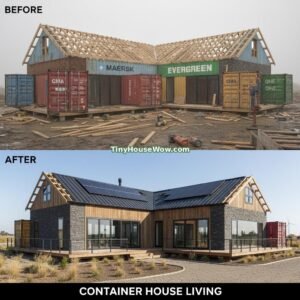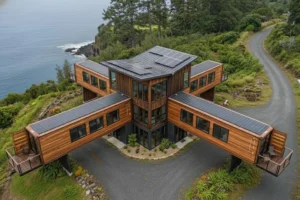


This impressive before-and-after illustrates the conversion of shipping containers into a spacious, barn-inspired home set in an open field. The construction phase features a large wooden truss framework atop multiple containers, creating a high-ceilinged structure, while the completed version boasts a dramatic A-frame roof, dark wooden exterior, expansive glass windows, and a balcony for outdoor enjoyment. Estimated at 1,200-2,000 square feet based on the scale and number of containers (likely 4-6), this design combines industrial durability with modern rustic aesthetics, making it suitable for rural or countryside living. It’s an excellent showcase of how repurposed containers can form open, airy spaces that feel luxurious and connected to nature.
Key Features and Design
The architecture highlights bold, functional elements with a nod to barn aesthetics:
- Exterior: Dark wooden siding over the containers for a weathered, rustic look, paired with a metal A-frame roof that provides height and drama. Large triangular windows at the gable end flood the interior with light, and a small balcony adds a cozy upper-level outdoor space with plants and seating.
- Structure: The open truss system in the build phase evolves into a vaulted ceiling, ideal for loft areas or high-volume living spaces. Containers are arranged to create a central open area, possibly for a great room or atrium.
- Outdoor Integration: Minimal landscaping with grassy surroundings emphasizes simplicity, while the design allows for potential additions like patios or gardens.
- Interior Potential: Though not detailed in the image, such homes often include open-plan layouts with 2-4 bedrooms, a kitchen, bathrooms, and high ceilings for a spacious feel, with insulation and HVAC added for year-round comfort. This style creatively merges modern container efficiency with traditional barn forms, prioritizing natural light and sustainability.
Estimated Costs to Build
Building a barn-style shipping container home like this in 2025 can range widely based on size, location, materials, and customization. On average, expect $25,000 to $250,000 total, or $150 to $350 per square foot. For a more elaborate design with wooden cladding, large windows, and structural trusses, costs could climb to $150,000–$300,000, especially in areas with strict regulations. Breakdown includes:
- Containers and Materials: $20,000–$60,000 (including wood, roofing, glass, and reinforcements).
- Labor and Site Prep: $15,000–$50,000 (higher for complex truss work).
- Permits, Utilities, and Finishes: $10,000–$30,000 (engineering plans and HVAC can add $5,000–$15,000). DIY options or prefabricated elements can reduce expenses by 20-40%, but factor in regional differences—costs are lower for basic builds at $10,000–$35,000.
Construction Timeframe
The timeline for constructing a container home of this scale varies by method and expertise. Professional builds can take 4-6 weeks for factory-prefab versions or several months for on-site assembly, while full custom projects average a few months to a year, including design and permits. For DIY efforts, expect 3-6 months or more, and expert contractors might complete it in 1-2 months. Key phases:
- Planning and Permits: 2-4 weeks.
- Foundation and Container Setup: 1-2 weeks.
- Framing, Roofing, and Exterior: 3-5 weeks (truss installation adds time).
- Interior and Finishing: 4-6 weeks. Factors like weather, supply delays, or intricate features (e.g., balcony) can extend the process, so planning during favorable seasons is recommended.
Why Build a Container Home? Benefits and Considerations
Shipping container homes like this offer quick, affordable construction with a low environmental impact, as they repurpose durable steel structures that can last decades with proper care. They’re modular for easy expansion, resistant to pests and weather, and allow creative designs like this barn hybrid. However, consider challenges such as insulation for temperature control, potential rust prevention, and navigating local building codes. This example highlights how containers can create unique, high-ceilinged spaces perfect for modern living. Ready to start your build? Drop your ideas below!