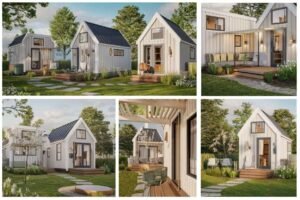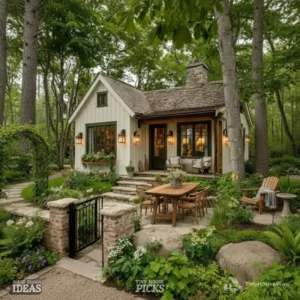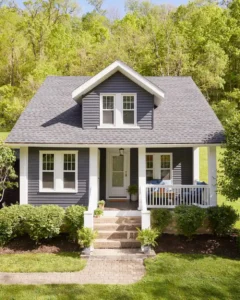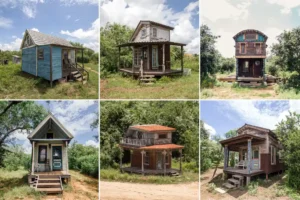
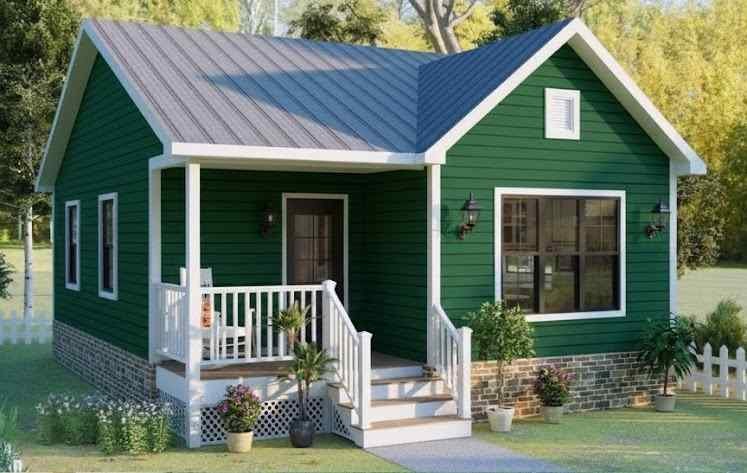
This adorable green tiny house embodies the essence of minimalist living with a touch of classic charm. Designed as a compact yet functional home, it features a vibrant emerald exterior with white trim, a welcoming front porch complete with railing and steps, and a gabled roof for a cozy cottage feel. The layout is efficient and family-friendly, spanning approximately 600-800 square feet (based on similar designs), making it ideal for small families, couples, or individuals seeking simplicity without sacrificing comfort. Surrounded by lush greenery, it’s perfect for rural or suburban settings, blending seamlessly with nature while offering modern amenities.
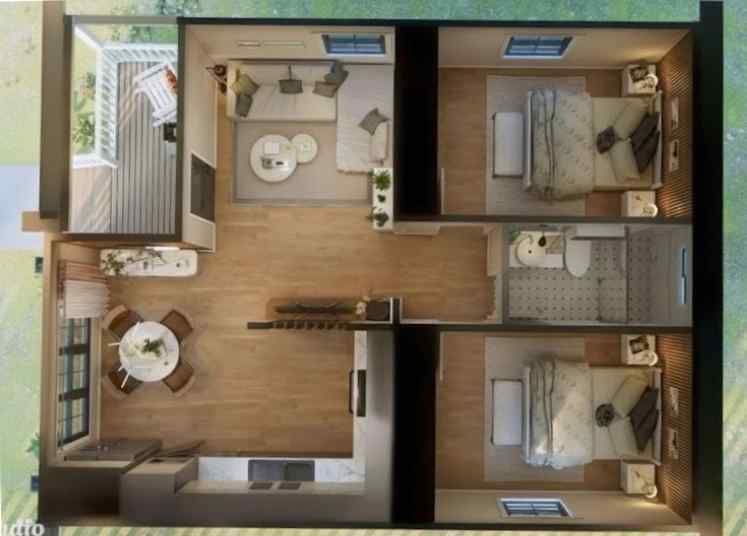
Key Features and Floor Plan
The exterior boasts durable siding, large windows for natural light, and potted plants adding a homey vibe. Inside, the open-concept floor plan includes:
- A spacious living area with comfortable seating and room for relaxation.
- A compact kitchen with essential appliances, dining space, and efficient storage.
- Two cozy bedrooms, each with ample space for beds and personal touches.
- A full bathroom with modern fixtures.
- Additional perks like hardwood floors, neutral decor, and plenty of windows to maximize the sense of space.
This design prioritizes sustainability, with potential for eco-friendly additions like solar panels or energy-efficient insulation, promoting a low-impact lifestyle.
Estimated Costs to Build
Building a tiny house like this can vary based on location, materials, labor, and customization. According to 2025 data from sources like HomeGuide and HomeAdvisor, the average cost ranges from $30,000 to $70,000 for a basic DIY or pre-built model. For a more customized version with premium features (e.g., high-end appliances, stone foundation, or solar integration), expect $80,000 to $150,000. Breakdown includes:
- Materials: $15,000–$40,000 (lumber, siding, roofing, windows).
- Labor: $10,000–$30,000 (if hiring professionals; DIY can save significantly).
- Foundation and Utilities: $5,000–$15,000 (site prep, plumbing, electrical).
- Permits and Extras: $2,000–$10,000 (zoning fees, interior finishes).
Costs in high-demand areas like California could climb to $100–$600 per square foot, so factor in local regulations. Opting for prefabricated kits can reduce expenses by 20-30%.
Construction Timeframe
The timeline for building this tiny house depends on your approach. Professional builders can complete it in 8-12 weeks, from foundation to finishing touches, thanks to streamlined processes. For custom builds, it might take 4-6 months to allow for design tweaks and sourcing materials. If you’re going the DIY route—working part-time with basic tools—plan for 6-12 months or 500-600 hours of labor. Key phases include:
- Planning and Permits: 2-4 weeks.
- Foundation and Framing: 2-4 weeks.
- Roofing, Windows, and Exterior: 2-3 weeks.
- Interior and Utilities: 3-4 weeks.
- Final Touches and Landscaping: 1-2 weeks.
Weather, supply chain issues, or complexity (e.g., adding a porch) can extend this, so starting in milder seasons is ideal.
Why Go Tiny? Benefits and Considerations
Embracing tiny house living means lower utility bills (often under $100/month), reduced environmental footprint, and freedom from mortgage burdens. It’s a smart choice for downsizing, off-grid adventures, or affordable housing. However, consider zoning laws, as not all areas allow tiny homes on foundations. Ready to build your dream? Share your thoughts below!